
Find a Martinsville City Owner
The route from address to owner runs in three stages. Locate the parcel first. Read the assessor's name, then confirm the latest transfer in the clerk's land records. Martinsville's DataScout search is the local starting point. The city says it covers ownership, property characteristics, assessed values, enhanced mapping, and sale statistics. No stable sample card or fixed field sequence appears in the published material. Read the live result exactly as displayed.
- Search the known address or owner in the city-linked DataScout portal.
- Compare the map and property characteristics to make sure the parcel is the right one.
- Copy the parcel reference and owner spelling from the result.
- Search the Circuit Court Clerk's COVERS/SRA index for the latest deed or land instrument.
- Ask the clerk or assessor to resolve a mismatch before relying on the name.
The assessor answers which name sits in the tax record. The clerk answers which instrument was recorded. Neither display amounts to a title opinion, and the Martinsville City current-owner instructions explain owner-of-record timing in more depth.
Martinsville Ownership Record Sources
Owner research works best when each source keeps its own role. A parcel map orients the address. The assessor card shows the name used for tax administration. A tax bill ties a taxpayer to one year. The deed index points to the recorded transfer. That is the document that actually moved title. A bill name alone never establishes the current legal owner of record.
| Record source | What it contributes | Freshness or limit |
|---|---|---|
| DataScout assessor search | Ownership, characteristics, assessed values, map and sales tools | Vendor table lists a nightly update, not deed-to-roll timing |
| COVERS/SRA land index | Recorded deeds and related land instruments | Image access may require clerk authorization |
| MuniSelfService bill search | Taxpayer and bill inquiry for a selected year | Tax year is required; display is not a legal document |
| GIS and Engineering maps | Parcel location, streets, tax maps, and project context | Map outline is not a boundary survey or title record |
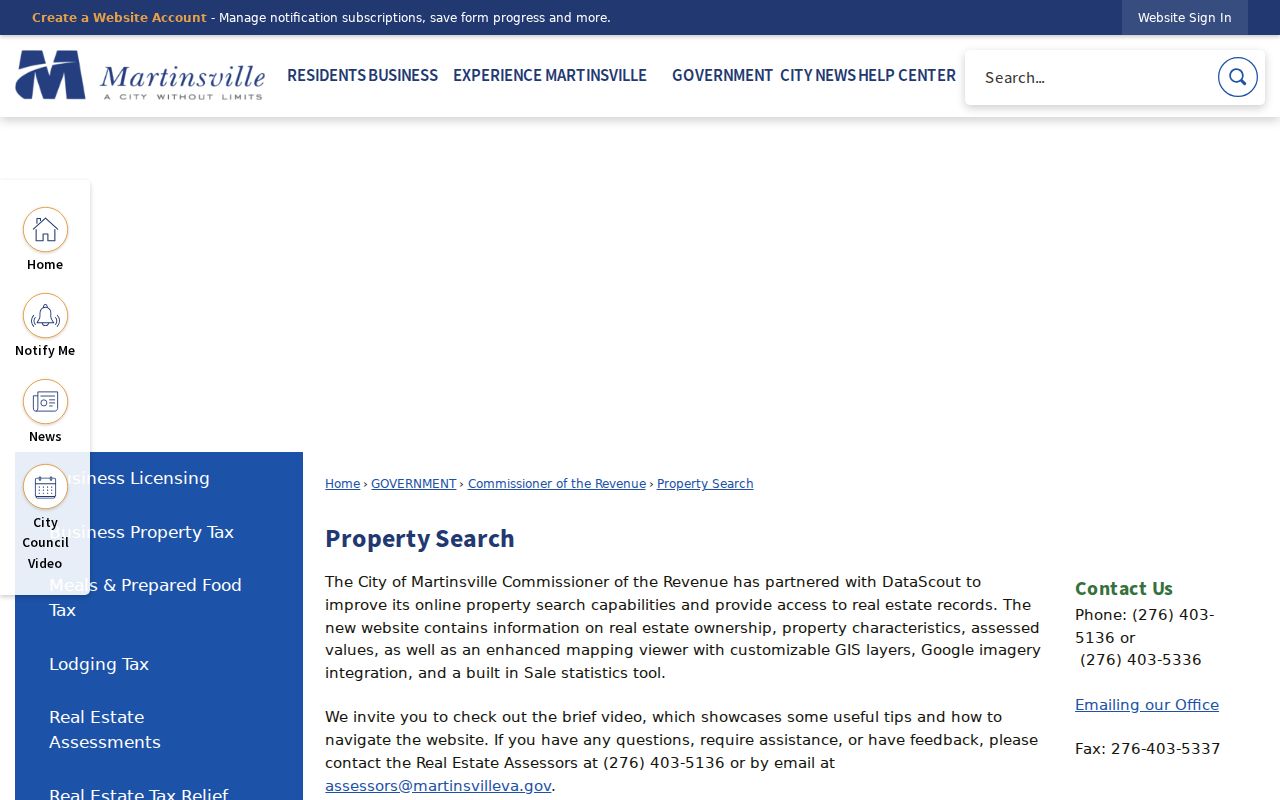
The DataScout image leads to the city's official assessor explanation. Martinsville's Property Search page names the categories the search advertises.
Use the source table to decide which office can verify an owner question. Not every name carries the same weight.
Martinsville Owner Names
An assessment roll may name an individual, a trust, an estate, or an LLC. Search the name exactly as the deed spells it. A current card may show a company or fiduciary. The Virginia SCC Clerk's Information System can confirm the entity's status, registered agent, and filing history. SCC records identify the business entity. They do not replace the recorded deed or always reveal beneficial ownership.
A name alone can fit more than one person or property. Compare the parcel ID, situs address, and legal description. Keep the date of each result. If probate is involved, the Circuit Court Clerk holds wills and fiduciary records. An executor or administrator may appear in a later deed. A death certificate is not itself a transfer of land. Confirm the conveyance or court authority in the land or probate record.
- Owner of record
- The name attached to a property in an administrative roll or recorded instrument.
- Grantee
- The party receiving a land interest in a deed.
- Situs address
- The property's location, which can differ from the owner's mailing address.
- Title
- The legal interest in property, which cannot be established by a name field alone.
Martinsville Mailing and Situs
The situs address points to the parcel itself. The mailing address points to where tax notices go. An absentee owner, estate, trust, or company can use a mailing location far from the land. The city in a postal address may not be the tax jurisdiction either. Martinsville City is independent from Henry County. Both keep separate records even though local geography and postal names overlap.
Verify the situs with the map and parcel record. Then compare the tax bill with the deed. Never infer where a person lives from a mailing address in an assessment record. Do not try to reverse-engineer an address protected by Virginia's Address Confidentiality Program. When a property sits near a jurisdiction edge, ask the assessor which locality holds the parcel and check the matching deed books.
Martinsville Owner Update Timing
Vision Government Solutions lists Martinsville as updated nightly. That is a vendor refresh statement. It does not show how soon a newly recorded deed changes the owner display. No official period for a sale-to-roll update is published. Closing, recording, indexing, and assessment processing each follow separate schedules.
After a recent purchase, search for the deed in COVERS/SRA. Compare its recording date with the assessor card. The deed usually wins. A newer recorded deed is a better current transfer source than an older assessment name. If the deed is filed but the assessor still shows a prior owner, contact the Commissioner of the Revenue about the roll. When the clerk index shows no document, ask the Circuit Court Clerk whether it was received, indexed, or filed under another name.
Confirm the Martinsville Owner
True confirmation takes more than a matching street address. Read the most recent recorded conveyance for Martinsville City. Study its parties and legal description. Then match that description to the parcel. A lot may have been divided, combined, or described by metes and bounds. A shared address then means little. The clerk's current online deed index starts July 1, 1971. Legacy deed data reaches back to 1942 and runs through 2005. Anything older may sit in a different series or a county route.
For a sale, an estate, or a boundary dispute, get a title professional. Let that person trace the chain. The Martinsville City deed-record page covers COVERS/SRA coverage. It also explains how to request an image or copy from the clerk. Keep assessor, deed, and map references together. That way any later reviewer can see which record supports each fact.
Martinsville Estate Property Owners
After an owner dies, the deed chain changes. The individual's name may give way to an estate, an executor, an administrator, an heir, or a later grantee. Martinsville City's clerk holds wills and fiduciary records. Current system coverage starts January 11, 1990, and legacy material reaches back to 1942. Search the land index under both the decedent's name and the fiduciary's. Then compare the probate file against any recorded deed.
A trust usually surfaces through its trustee. A company appears under its legal name. The SCC can confirm entity filings, though it cannot replace the land record itself. Never assume a beneficiary designation or transfer-on-death deed exists for a Martinsville City parcel. Ask the clerk which instrument or probate file actually establishes the transfer.
Martinsville Owner Lookup Limits
An owner lookup opens a route to public property records. It does not grant permission to contact anyone or publish private details. The assessor's display can lag. It may show a mailing name or an entity rather than the owner of record. A deed index is no substitute for a full title review. A map can identify a parcel without proving its boundary. Lawful uses include property research, a transaction, estate work, and civic review.
Need a record corrected? Contact the office that controls the field and supply evidence. A Virginia FOIA request should name a parcel and an address. It should also name a record type and a time period with reasonable detail. The city may charge actual search and copying costs. It may request a deposit once an estimate passes $200. It need not build a new owner report.
Use owner information carefully. A public name is not consent to harass, intimidate, or harm anyone. Confirm title with the recorded instrument and the custodian.