
Trace Martinsville Former Owners
Tracing who owns a property in Martinsville City means working backward. Go one recorded deed at a time. Start with the newest deed and follow the parties named in each instrument. The assessor card helps pin down the parcel. But the Circuit Court Clerk's land index is where recorded transfers live. Online coverage splits into current and legacy ranges. Records older than the local clerk period may lead into Henry County. A careful chain keeps deed dates, party names, legal descriptions, and jurisdictions together. It also leaves room for estate filings, releases, and other documents that explain gaps. Search Martinsville City property records by owner name.
| Record period | Grantor to grantee | Instrument | Reference to save |
|---|---|---|---|
| Current online deeds from July 1, 1971 | Copy the parties from each verified index row | Read the actual recorded instrument | Use the clerk's displayed date and reference |
| Legacy deed data, 1942 through 2005 | Carry the prior grantor back as the next search name | Confirm the book or image with the clerk | Record the series, date, and legal description |
| Before the local clerk record period | Check the earlier jurisdiction named by the city | Ask Henry County about the applicable books | Keep the historic locality with the deed |
The sequence follows each conveyance from grantee back to that same person's role as grantor in an earlier deed. Pause whenever a name changes, an entity or estate appears, or a description shifts. Verify the parcel before extending the chain any further. The table is a worksheet, not a sample transaction.
Read the Martinsville Former-Owner Chain
Begin with the most recent deed tied to the parcel. Read who received the interest. Then search that grantee name as a grantor in an earlier conveyance. Compare the prior legal description against the current deed. Repeat until the online range ends or a name, description, or jurisdiction stops matching. A clean sequence stands on instruments alone, never on a portal's owner summary.
- Use the assessor parcel card to capture the current parcel clue and legal description, if shown.
- Find the latest deed in the clerk index and copy its date, parties, and reference.
- Search the grantee as a grantor and compare the next earlier description.
- Note releases, judgments, fiduciary records, or a new entity name that affects the trail.
- When the city range ends, ask the clerk or Henry County which older books apply.
Every step should yield a citation another reader can repeat. An instrument may describe a different lot. The chain has then drifted to a neighboring parcel. Never bridge a gap by assuming two similar names belong to one owner of record.
The image links to the land-record search entrance. Open Virginia COVERS/SRA to search a Martinsville City deed index entry.
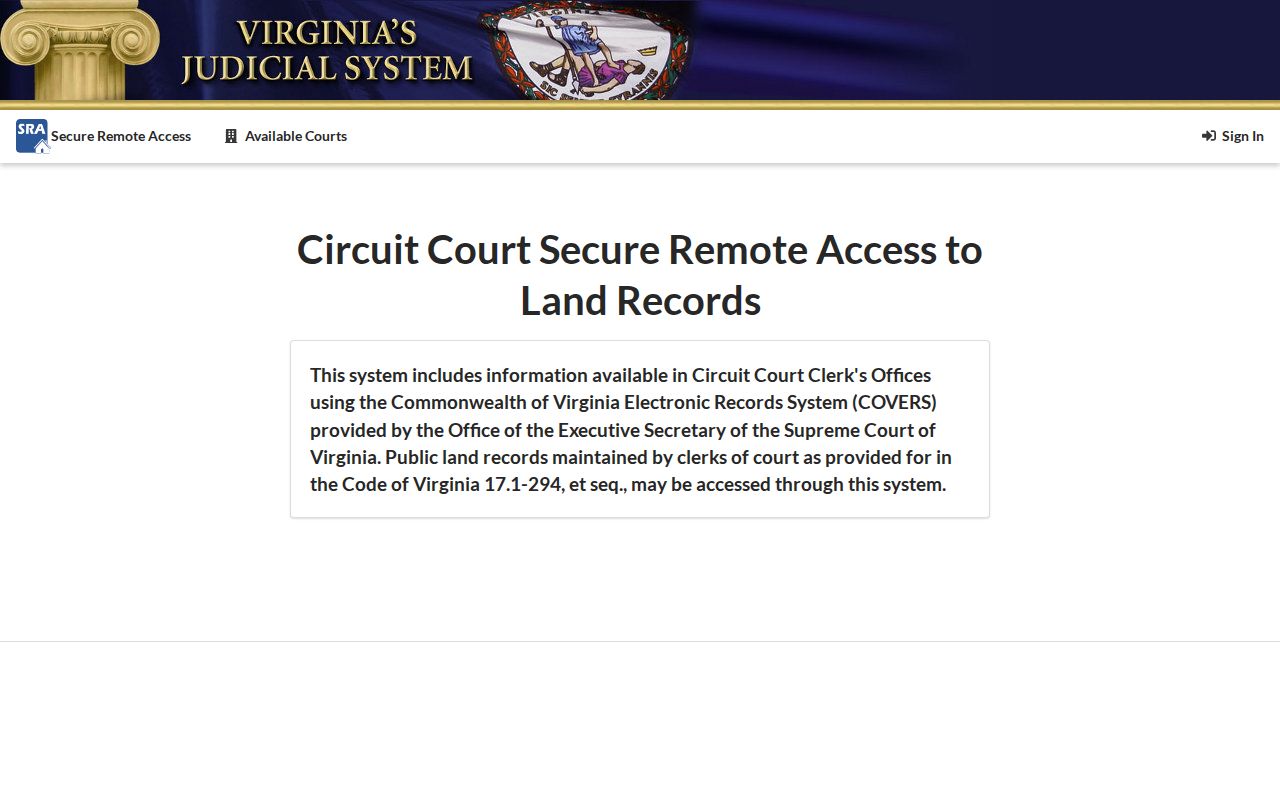
An index reference gives the next clue. The deed image itself supplies the transfer details.
Martinsville Former Owner Record Depth
The Martinsville RMS lists deeds and land records online from July 1, 1971. A separate legacy list covers deed and land records. That legacy list runs from January 1, 1942 through December 31, 2005. The local clerk's office dates its own records to April 20, 1942. These overlapping ranges point to distinct search routes. They promise neither that every image is open online nor that an original record is missing. That second guarantee cuts both ways.
The city's page also lists separate ranges. These cover judgments, financing statements, miscellaneous instruments, wills, and fiduciaries. A former-owner search may need more than deeds. That is true when a parcel passed through an estate or a court-ordered transaction. Ask which index series fits the document type you need. Exact microfilm holdings and archive years should be confirmed with the clerk before a visit.
The image below links to the city's coverage page. Martinsville's RMS date table is the starting point for the current and legacy ranges.
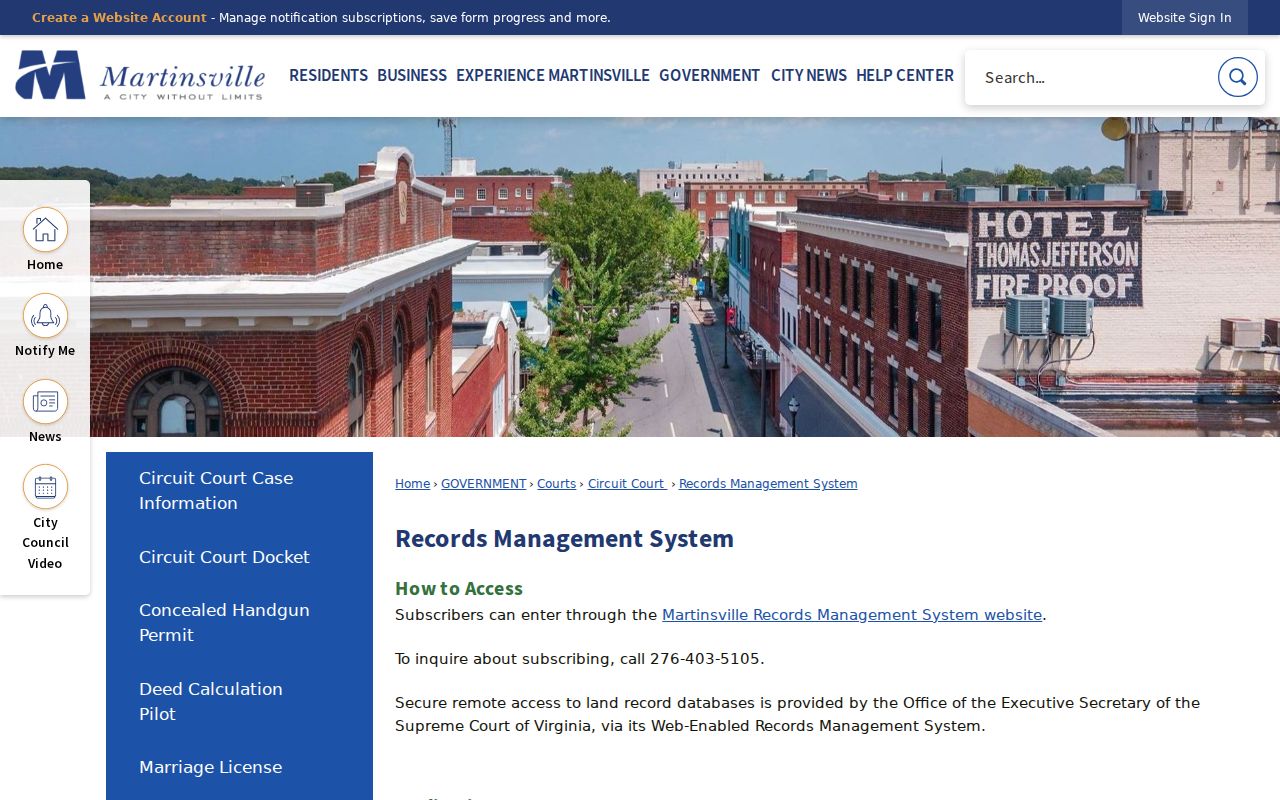
When a recording date falls in the overlap, use both current and legacy paths. Then retain the series the clerk names.
Earlier Martinsville Owner Records
For records predating Martinsville's local clerk period, the city directs researchers elsewhere. The destination is the Henry County Circuit Court Clerk. That is a jurisdiction handoff. It is not advice to search both offices for every recent transaction. Martinsville began as a town in 1791. It became an independent city in 1928. The recording locality on an older deed may differ. It may not match a modern mailing address or map boundary.
When the chain reaches the local cutoff, note the date, parties, book reference, and legal description. Do this before contacting Henry County. Ask which deed books or indexes match that recording period. An older instrument may use a historic lot name, street, or metes-and-bounds description. Request details on holdings, microfilm, and search fields rather than assuming an online image exists.
Martinsville Former Owner Index Access
Virginia's COVERS/SRA access separates index-only research from subscriber images. Index access may be free where the clerk enables it. An image requires local authorization, an agreement, and applicable fees. Martinsville lists a subscription contact at 276-403-5105. A researcher can see an index result. Yet the full deed may be unreadable remotely.
The screen below links to the state's explanation of the access levels. Virginia's SRA page describes index and image access.
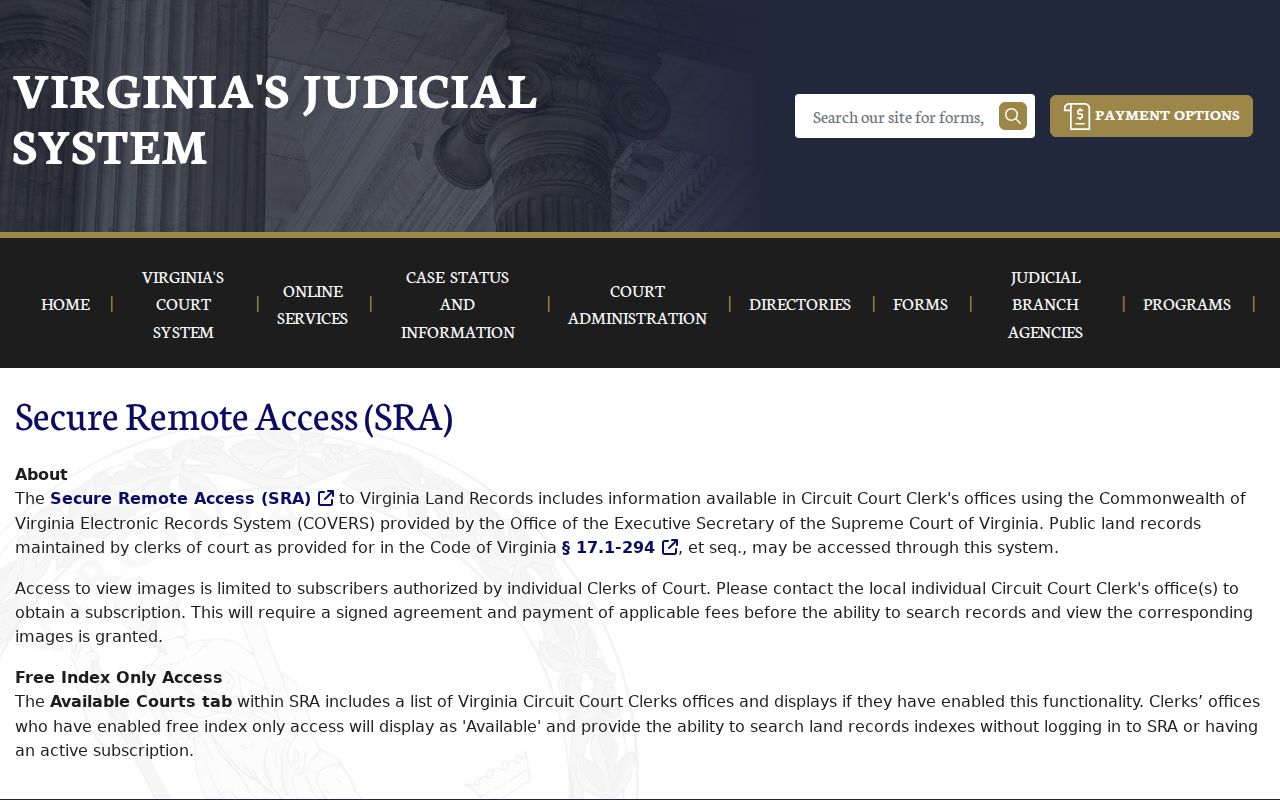
For an inaccessible image or a legacy entry, ask the clerk which inspection or copy option applies. The clerk posts no current copy prices online.
Martinsville Estate Owner Transfers
An owner's death can reshape a parcel's chain of title. The record itself never disappears. Martinsville's clerk holds wills and fiduciary records. Current material runs from January 11, 1990, and legacy files reach back to 1942. When the deed trail shifts at an estate, an executor, administrator, estate, or heir may surface as a party in the next land instrument. Search both the individual and the fiduciary name.
A death certificate proves the event, not the transfer. The probate file shows who held authority to act. A recorded deed or court order shows how the property interest actually moved. Trusts and LLCs can also step into the grantee field in place of a person. The Virginia SCC helps identify an entity filing. But only the recorded land document supports the conveyance.
Martinsville Former Owner History Leads
The Virginia Department of Historic Resources survey lists 195 Martinsville records in its IPS database. A historic property name, district reference, or architectural survey entry can pin down a house when the address has changed. A modern card may give little context on its own. Treat these as leads. Confirm each former owner through the clerk's deed index or probate file.
Blue Ridge Regional Library and the Martinsville-Henry County Historical Society may hold local directories, newspapers, obituary indexes, and Sanborn maps. They may also hold other history materials. Their exact holdings and years vary, so check a catalog or call ahead. A directory entry can link a former name to a building. Still, an index is not a recorded conveyance.
Terms in a Martinsville Deed Chain
A few terms keep a previous-owner search consistent from one instrument to the next. The grantor conveys the interest. The grantee receives it. The chain of title is the full sequence of recorded transfers and other instruments affecting the parcel. A reverse index lets you hunt a party in the grantor role. That helps after finding the party as a grantee. A book and page or instrument reference is a locator, nothing more.
Warranty and quitclaim describe different promises. But the effect always depends on the instrument and the law. No document type erases an earlier defect. Compare the actual deed, any release, probate material, and the legal description before drawing conclusions. For a purchase, estate, or dispute, a title company or attorney can assess legal sufficiency.
- Grantor
- Party conveying an interest in a deed.
- Grantee
- Party receiving an interest in a deed.
- Chain of title
- The sequence of recorded transfers and related instruments for a parcel.
- Reverse search
- Following a person from a prior grantee entry to an earlier grantor entry.
Limits of Martinsville Former Owners
A name list is not a complete chain. Unrecorded interests, indexing gaps, estate proceedings, and parcel splits can all bend the story. The city clerk lists current and legacy search periods. Earlier records run through Henry County. Some records appear by index without a matching image. The clerk publishes no detailed inventory of microfilm or archive holdings.
Keep a source note for every former owner. Include jurisdiction, instrument date, party names, legal description, and reference. Never infer present contact details from a historic deed. Use public information for lawful property history or estate research. Verify key facts with the custodian.
Stop at the verified record. If the chain crosses before 1942, follow the city's Henry County referral and confirm the applicable book with that clerk.