
Martinsville Deed Types and Uses
Deed records are the papers that transfer ownership or an interest in land. Martinsville's land-record system covers deeds and related instruments. The system does not label every document type the same way. The table below describes common instruments by function. It is not a list of menu options in the online system. Read the title and text of the actual document. Draw no conclusion from its category alone.
| Instrument type | What it does | Common research use |
|---|---|---|
| Deed of conveyance | Records a transfer of a land interest | Confirm the named parties, description, and recording date |
| Deed of trust | Creates a security interest tied to real property | Find the related release, assignment, or foreclosure record |
| Release or satisfaction | Shows that a recorded interest was released or satisfied | Check whether a later record addresses an earlier instrument |
| Judgment or lien filing | May affect a title inquiry or connect to a court file | Use the docket to learn about priority or disposition |
Virginia deeds come in several forms, including warranty, special warranty, quitclaim, and trustee deeds. The online system may label these kinds differently. A deed type alone proves little. It does not show that every lien, claim, or boundary issue is resolved, so the legal description and every referenced document still matter.
Martinsville City Deed Index
Match the category first. Martinsville's Records Management System points land-record users to Virginia's Web-Enabled Records Management System through COVERS/SRA. Online deed and land records begin July 1, 1971. Financing statements start July 5, 1994, and general miscellaneous records run from September 7, 1990. Judgments reach back to July 2, 1986. Those dates are not interchangeable, so pick the index that fits the instrument.
The state search page asks for a locality and then opens the remote access system. Start with a party name you know. Add a date or document clue if you have one. A parcel number helps too. When a result is unclear, ask the Circuit Court Clerk about the local index method. The image links to the actual land-record entry. Virginia's COVERS/SRA login page is the remote starting point Martinsville identifies.
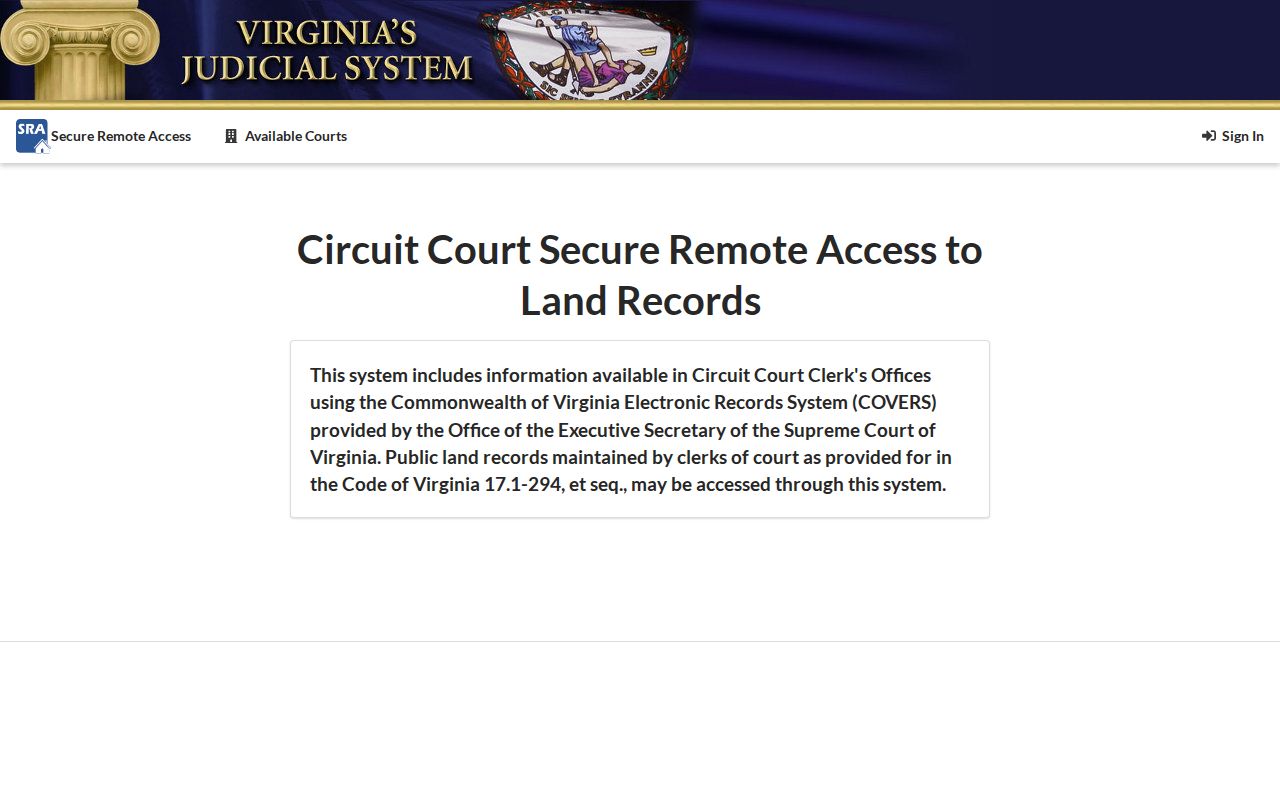
A search row is only a first step. Copy the parties, category, date, and reference exactly as shown before requesting the image.
Current and Legacy Martinsville Deeds
Current deeds and land records date from July 1, 1971. A legacy dataset covers January 1, 1942 through December 31, 2005. The two ranges overlap. Test both series for a deed from those years. Or ask the clerk which one holds the instrument. Overlap means separate access paths. Missing or duplicate originals are not the issue.
The city's clerk office dates to 1942. It holds land and court records from April 20, 1942 to the present. Earlier material sits with the Henry County Circuit Court Clerk. That boundary matters when a modern parcel's history predates Martinsville's records. Attach each deed's date and jurisdiction to every reference.
The city's official page shows coverage and subscription details. The Martinsville Records Management System page lists the local date ranges.
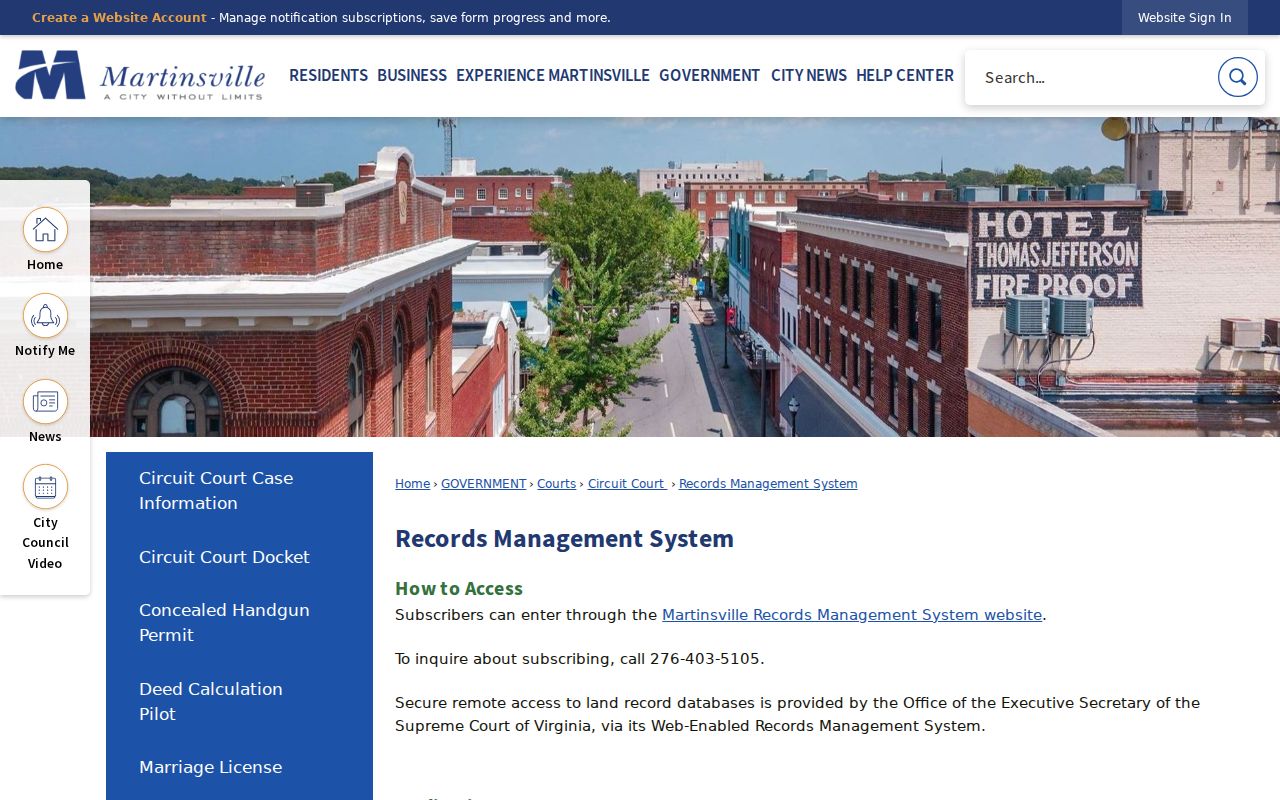
A legacy index row is only a pointer. Confirm book or image access with the clerk instead of assuming every old instrument is available online.
Martinsville Grantor and Grantee Deeds
A grantor conveys an interest. A grantee receives it. Indexes built on those roles can locate a party's records, but names appear in more than one form. Search the spelling shown on the assessor record first. Then test a company, trust, or estate name if the deed or probate file uses one. A parcel identifier and legal description separate people with similar names.
The Martinsville public page does not spell out the search-field labels or filters in COVERS/SRA. Treat a name search as a locator. It is not a complete list of every recorded interest in the property. Search a reasonable date span, and ask the clerk to identify a book, page, or instrument reference when a row is unclear. The city publishes no copy or certification fee schedule. Call before planning payment.
- Grantor
- The party shown as conveying or granting an interest in a recorded instrument.
- Grantee
- The party shown as receiving the interest.
- Index
- A finding aid that points to the recorded document; it is not the document itself.
- Image access
- Viewing the instrument, which may require clerk authorization even when an index row is visible.
Index Access and Deed Images
Virginia separates two access levels in SRA. Index access may be free where a clerk enables it. Images are another matter. They require the clerk's authorization, a signed agreement, and applicable fees, so they sit behind a subscription. Martinsville lists 276-403-5105 for subscription questions. The city posts no complete fee schedule for images or certified copies.
On the Virginia SRA information page, the state describes what free index access means. It also explains paid subscriber access.
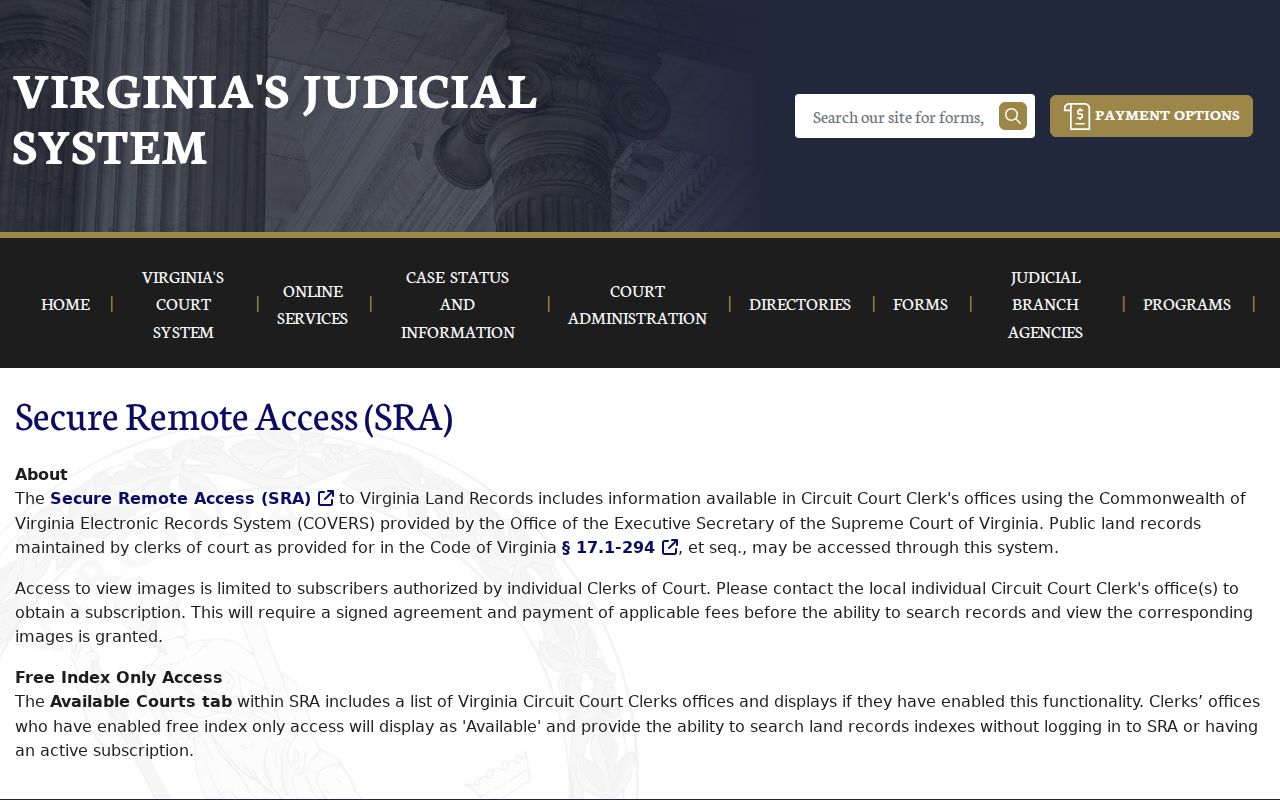
An index row is a lead, not an image. It is not a certified copy either. Ask whether the instrument can be viewed remotely, at a courthouse terminal, or through a clerk-provided copy request.
Get a Martinsville Deed Copy
Requesting a copy from the clerk works best with a few details in hand. Give the party names and the approximate recording period. Include the reference from the index when you have it. Without one, the parcel address and legal description will help staff pinpoint the deed. The clerk's office sits at 55 W Church Street, Room 205, Martinsville, Virginia 24114, and answers the phone at 276-403-5106. Listed hours run Monday through Friday, 9 a.m. to 5 p.m.
Copies come in a few forms. Ask whether an ordinary copy, a certified copy, or an image subscription fits the task. The city's pages do not state the current copy price, mailing steps, or certification charge, so confirm those with the clerk rather than trusting an old fee. Planning a courthouse visit? Bring the party names and date range. Mailing a request instead? Check the clerk's current instructions first.
The courthouse image links to the clerk's service page, and Martinsville Circuit Court Clerk contact information gives the office route along with the record-span notice.
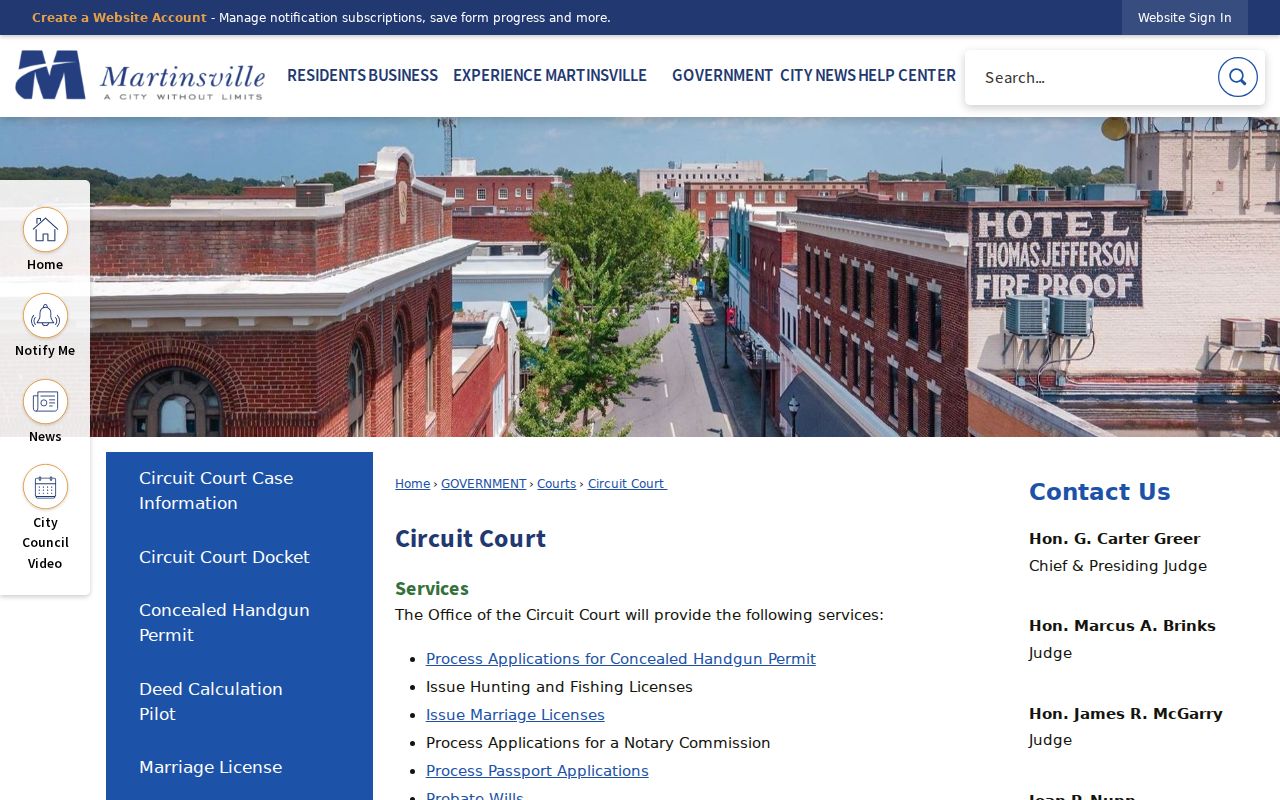
Follow the clerk's current copy instructions for costs and delivery options. A remote index and the courthouse counter are simply two different ways into the same deed records.
Earlier Martinsville Deed Books
For records predating the local clerk period, the city points researchers to the Henry County Circuit Court Clerk. That instruction matters. It is a mistake to assume every parcel with a Martinsville mailing address was always recorded in the city books. Martinsville became an independent city in 1928. The local record span begins in 1942. Anything earlier must be traced through the jurisdiction that held the deed at the time.
Work backward from the oldest verified Martinsville deed. Read the legal description closely. Note the named grantor and grantee. When the trail runs out of the city's books, ask Henry County which deed books or indexes apply. A modern boundary or street name may not match an older legal description, so expect some translation between eras. Confirm microfilm holdings and archive years with the county before making the trip.
Other Martinsville Land Records
The record system covers more than deeds. Financing statements, judgments, wills, fiduciary records, and general miscellaneous filings each carry their own coverage dates. A release, assignment, satisfaction, or judgment can matter once a deed search raises a question. That question is about a recorded interest. One caution applies. UCC financing statements concern personal-property security interests. They should not be treated automatically as real-estate liens.
When a judgment or lien ties back to a court matter, the Virginia Circuit Court Case Information portal lets you search by locality, party name, case number, or hearing date where available. The portal's landing page offers no Martinsville docket example or complete field inventory. For the underlying case file, contact the clerk and ask for the docket or case number. Be careful with tax data, too. A delinquent status on a tax portal is not the same as a recorded foreclosure. It is also not the same as a tax-sale deed.
Virginia FOIA covers non-court records held by a public body. That applies when the request identifies the records with reasonable specificity. It does not obligate the clerk to build a new title report. State the parcel or parties, the record kind, and a useful date range. If copying may be costly, ask for an estimate first.
Martinsville Deed Record Limits
A deed is a recorded instrument, nothing more. It does not guarantee clear title. The document shows the parties and the legal description for one conveyance. A full title review can pull in prior deeds, releases, court orders, easements, and more. Index access has its own limits. Coverage may be incomplete for a date range. An image may sit behind a restriction for authorized users only.
Keep copies of both the index reference and the instrument itself. Compare the legal description against the current assessor record. Also check any survey or plat that applies. For a recent transfer, timing matters. The newest recorded deed may actually run ahead of the assessor roll. Questions about legal effect or title insurance belong with a title professional. A single index row will not answer them.
Recorded is not the same as settled. Confirm an instrument with the clerk. A deed index is not a title opinion and a map is not a boundary survey.